
Nuts in Middle Eastern Food: Flavor & Portions
Food & nutrition · Syrian Sweets of America · Published October 22, 2026
Explore pistachios, walnuts and pine nuts in snacks, rice and sweets, with practical portion and allergen considerations.
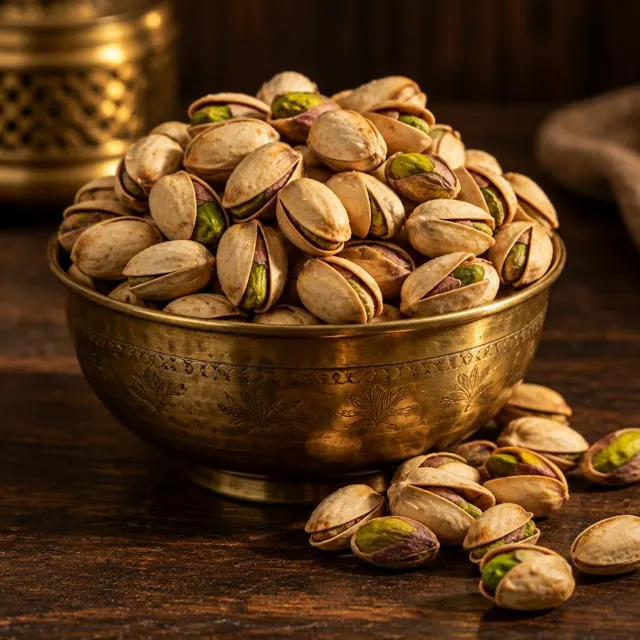
A garnish, filling or snack
Pistachios brighten pastries, walnuts fill cookies and pine nuts top rice. Nuts can also be eaten as a snack. These uses involve very different amounts and other ingredients, so the health reputation of a nut does not describe a whole syrup pastry or chocolate-coated snack.
Part of a varied food pattern
USDA includes nuts and seeds in the protein-food group. Their contribution comes with fat and energy as well, which is why portions matter. Choose a comfortable amount rather than treating a bowl as unlimited because it contains a plant food. Product labels, where available, are more useful for numbers than assumptions based on a photo.
Seasoning and coating count
Salted, unsalted, sugar-coated and chocolate-coated nuts are not interchangeable. Read available labels and ask about seasoning if sodium or added sugar matters to you. Enjoyment and balance can coexist; there is no need to market a sweet-coated nut as if it were identical to a plain one.
Allergens deserve a clear plan
Tree nuts and peanuts are major food allergens recognized by the FDA. A pastry may contain nuts inside even when none appear on top. Shared equipment may matter too. Confirm ingredients and cross-contact handling before ordering for an allergic guest; visual inspection is not enough.
A serving idea
Add a small nut bowl to a fruit-and-cookie table, or use pine-nut rice alongside vegetables and a protein dish. Our catalog offers several nut options to compare by flavor and preparation. Ask about the exact product rather than requesting a vague “healthy nut mix” that does not specify your needs.